Best Electronic Drum Kits for Small Spaces and Apartments
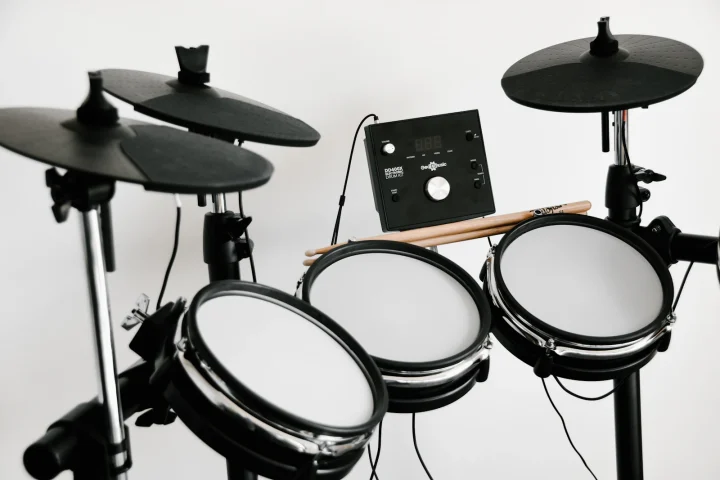
A compact electronic drum kit with a folding rack and mesh pads fits in a bedroom corner: here is what to look for and how to keep floor noise down.
PercussionDream is reader-supported. When you buy through links on this page we may earn an affiliate commission, at no extra cost to you. How this works
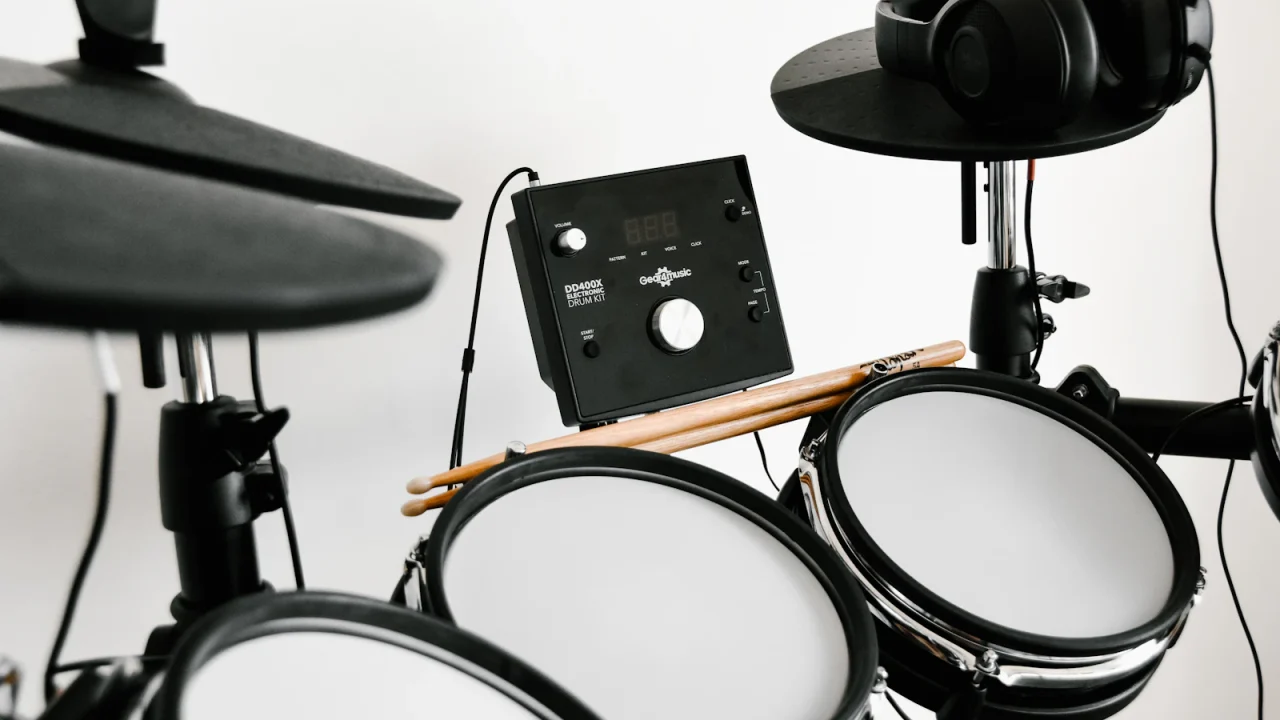
You do not need a spare room to learn the drums. A compact electronic kit can live in the corner of a bedroom, fold away after practice, and be played on headphones while the rest of the household carries on as normal.
This guide explains what makes an electronic drum kit work in a small space, how to keep the noise down in a flat or a dorm room, and which features to look for. It is written for beginners and parents, so you do not need any drum knowledge to follow along.
What makes a kit right for a small space
| Feature | Why it matters | What to look for |
|---|---|---|
| Folding rack | The kit can stand against a wall or in a cupboard between sessions | A rack described as foldable, with pads that stay attached |
| Compact pads | Smaller pads sit closer together, so the frame is narrower | 8-inch pads are common on compact kits |
| Mesh heads | Quieter under the stick than hard rubber | Mesh on the snare and toms |
| Kick design | Decides how much thump goes into the floor | Pedal-only trigger for least noise, kick pad for most realism |
| Headphone output | Lets you practise without a speaker | Standard on electronic kits, but check that headphones are included |
| Included seat | A drum throne takes less floor than a chair | Some all-in-one kits include one |
| Adjustable height | A compact kit still has to fit the player | A rack that adjusts for adults as well as children |
How much room do you really need?
The kit itself is only part of the footprint. You also need space behind it for the throne and your legs, and a little room at the sides so your elbows and sticks do not hit a wall.
Makers publish the floor area their kits need. Use that figure, not the box dimensions shown in a listing, which often describe the packaging. Then do three things before you buy:
- Mark the area on the floor with tape, using the maker’s footprint.
- Add about two feet behind for the seat.
- Sit in the space on a chair and swing your arms. If you touch a wall or a shelf, the spot is too tight.
A corner often works well. The two walls sit behind the rack, where you never reach, and the open side faces the room. Our Setup Visualizer lets you try a layout on screen before you move any furniture.
Noise in a flat: taps and thumps
Electronic drums are quiet, not silent. With headphones on, nobody else hears the drum sounds. But two kinds of noise are still made in the room.
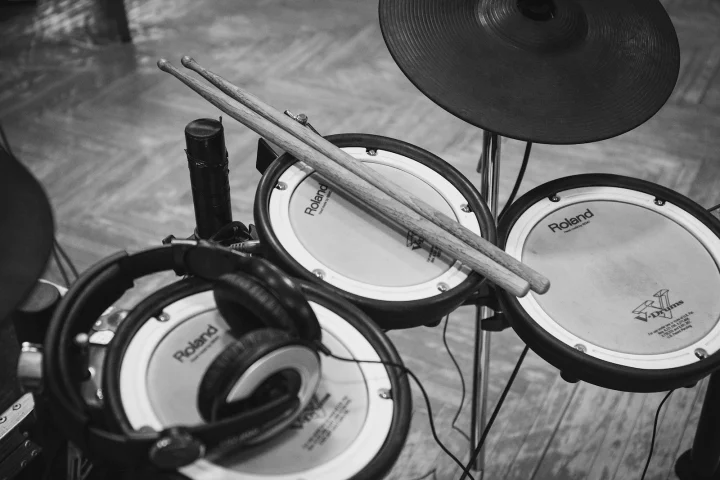
- Stick taps. You hear a soft tapping from the pads. Mesh pads are quieter than rubber ones. Cymbal pads are usually the loudest part of the kit. This noise travels through the air, so a closed door deals with most of it.
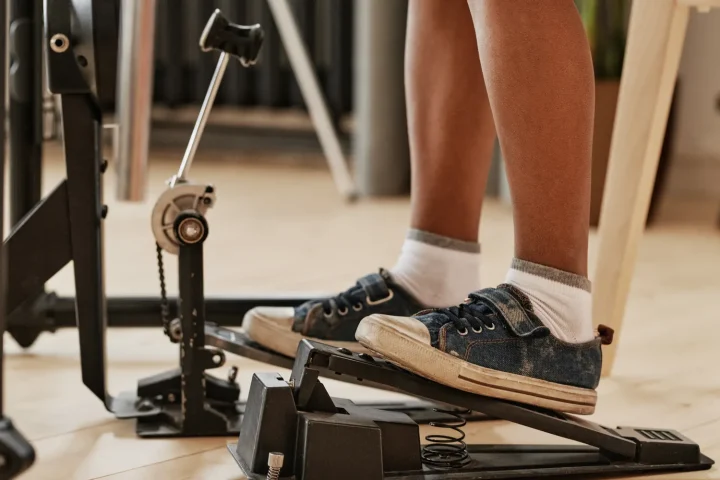
- Pedal thumps. Every bass drum note sends a small knock into the floor. This noise travels through the building. The person below you may hear it even when the person in the next room does not.
Which kick design is quietest?
There are two common designs, and they suit different homes.
- A pedal-only trigger has no beater and no pad. You press a pedal with a sensor in it. One compact kit we checked is described by its maker as keeping noise through the floor to a minimum with this design. The trade-off is feel. It does not teach your foot the movement of a real bass drum pedal.
- A kick pad or tower is struck by a normal pedal with a beater. It feels much more like a real drum, but each hit is a small impact that the floor carries.
If you live on the ground floor or in a house, choose on feel. If someone lives below you, the pedal-only design is the safer choice, at least to begin with.
Ways to cut the noise further
- Put the kit on a thick rug or a dense mat.
- Build or buy a raised platform that soaks up vibration. Drummers often make these from boards resting on soft supports.
- Fit a softer beater if your kit has a kick pad.
- Keep the kit away from shared walls.
- Agree practice times with the people around you. This costs nothing and solves most problems.
If you are unsure, ask your downstairs neighbour to listen while you play for a minute. It is much better to find out in the first week than after a complaint.
Folding and storing the kit
Most compact racks fold with the pads still attached, so the kit closes like a book and stands against a wall. A few points make this easier in daily life:
- Mark your settings. A small piece of tape on each clamp shows where it goes, so setting up takes a minute, not ten.
- Tidy the cables. Loose cables catch and pull when you fold the rack. Use the clips or ties supplied.
- Protect the module. Fold the kit so that the module faces inward, away from knocks.
- Decide where the throne and pedals live. They do not fold with the rack and are easy to trip over.
If you can leave the kit set up, do. A kit that is ready to play gets used far more than one that has to be unfolded first.
Compact kits and adult players
Small kits are sometimes sold as children’s kits, but many adults use them. Before you buy, check two things. First, the maximum height of the rack, so the snare and toms can sit at a comfortable level. Second, the size of the pads. On 8-inch pads there is less room for error, which some adults find fiddly at first and others stop noticing within a week.
If you are tall or already play acoustic drums, a kit one step up in size will feel more natural, at the cost of a little more floor.
Three compact kits compared
These three take different approaches to saving space. The details come from their Amazon.com listings, checked on 9 October 2026.
| Alesis Turbo Max | Roland TD-02K | Yamaha DTX452K | |
|---|---|---|---|
| Described as | Compact, foldable, all-in-one | Entry-level compact kit | Compact, lightweight folding rack |
| Kick | Pedal-only trigger | Check the listing | Kick pad with a bass drum pedal included |
| Drum pads | Four 8 in mesh pads | Check the listing | 3-zone snare pad and three tom pads |
| Built-in kits | 12, with 110 sounds | 16 | 10, with 415 sounds |
| Practice tools | 20 play-along tracks and exercises | Coach functions | 10 training functions |
| Bluetooth | Yes | With an optional adaptor | Check the listing |
| Throne and headphones | Both included | Throne and sticks not included | Check the listing |
When even a compact kit is too much
If there is truly no floor space, or the noise is still a problem, you have other options.
- A practice pad. It is the quietest and cheapest way to build stick technique, and it fits in a drawer. See our practice pad guide.
- A practice pad on a stand, with a pedal. This adds basic foot practice without a full kit.
- Lessons or a rehearsal room. Many drummers in small flats do their technique work at home and play a full kit elsewhere once or twice a week.
A pad and a metronome will take you a long way. The free Metronome Trainer runs in your browser, and the Rudiment Tracker gives you patterns to work through.
Common mistakes to avoid
- Trusting the box dimensions. Look for the maker’s stated footprint for the assembled kit.
- Forgetting the seat. The throne needs its own patch of floor behind the kit.
- Believing “silent”. Test the pedal noise with whoever lives below.
- Pushing the kit against a shared wall. Vibration passes straight through.
- Buying too small for the player. Check the rack’s height range.
- Folding the kit with loose cables. This is how plugs and sockets get damaged.
- Turning the headphones up. Keep the volume moderate to protect your hearing.
Compact kits worth a look
Disclosure: the buttons below are affiliate links. If you buy through one of them, we may earn a commission at no extra cost to you.
We chose these from their published specifications and from what a small home needs. We have not tested them ourselves, and we have not measured their noise. We checked each listing on 9 October 2026. Stock and prices change, so check the listing before you decide.
Alesis Turbo Max Electric Drum Set
Best for: Bedrooms, dorm rooms and anyone with a neighbour downstairs.
The listing describes a compact, foldable kit with pedal-only kick and hi-hat controls designed to keep floor noise down. A throne and headphones are in the box, so there is nothing else to buy.
- Four 8 in mesh drum pads and three 8 in cymbal pads
- Kick and hi-hat pedals, adjustable folding rack
- Throne, over-ear headphones and sticks included
- 12 kits, 110 sounds, 20 play-along tracks and Bluetooth
Keep in mind: The pedal-only kick does not feel like a real bass drum pedal, and the pads are small. The module is simple, which suits beginners more than experienced players.
Affiliate link — we may earn a commission.
Roland TD-02K V-Drums Kit
Best for: New and returning drummers who want a compact kit from a long-established electronic drum maker.
The listing describes it as an entry-level compact kit with features to reduce noise at home, a height-adjustable stand and built-in coaching tools.
- TD-02 module with 16 ready-to-play kits
- Onboard coach functions for guided practice
- Height-adjustable stand
- Bluetooth can be added with an optional adaptor
Keep in mind: The listing says the throne and sticks are not included. Check the listing for the exact pads and pedals in the box.
Affiliate link — we may earn a commission.
Yamaha DTX452K Electronic Drum Set
Best for: Players with a ground-floor room, or no one below, who want real pedal feel in a small frame.
The listing describes a compact, lightweight rack that folds for carrying, with a kick pad and a proper bass drum pedal included.
- Kick pad with bass drum pedal, and a hi-hat controller
- 3-zone snare pad for head and rim sounds
- 10 kits and 415 sounds, with 10 training functions
- USB for connecting to a computer
Keep in mind: A kick pad sends more thump into the floor than a pedal-only trigger. Check the listing to see whether a throne and headphones are included.
Affiliate link — we may earn a commission.
For a wider view of first kits, including acoustic options, see our guide to the best beginner drum kits. Our drum accessories guide covers thrones and sound control.
Related reading: our guides to electronic drum sets under 1,000 dollars and electronic vs acoustic drum sets.
Frequently asked questions
Can you play electronic drums in an apartment?
Yes, with care. Headphones keep the drum sounds private, but stick taps and pedal thumps remain. A rug or platform, a quieter kick design and agreed practice times make it workable in most buildings.
What is the quietest type of electronic drum kit?
A kit with mesh pads and pedal-only kick and hi-hat triggers makes the least noise in the room and through the floor. The cymbal pads are usually the loudest remaining part.
Can my downstairs neighbours hear electronic drums?
They may hear the bass drum pedal as a dull thump, because that vibration travels through the floor. The tapping of sticks on pads is much less likely to reach them. Ask them to listen while you test the kit.
Do electronic drum kits fold up?
Many compact kits have racks that fold with the pads attached, so they can stand against a wall. The throne and pedals are stored separately. Check that the listing describes the rack as foldable.
Are compact electronic kits only for children?
No. Many adults use them. Check the rack’s maximum height and be ready for smaller pads. Taller players, and those used to acoustic drums, may prefer a slightly larger kit.
How much space does an electronic drum kit need?
It depends on the model, so use the maker’s stated footprint. Then add about two feet behind the kit for the throne, and enough room at the sides to swing your arms freely.
Checklist before you buy
- Have I measured the floor and marked the maker’s footprint?
- Is there room behind the kit for the seat?
- Does anyone live below me?
- Is the kick a pedal-only trigger or a pad with a beater?
- Does the rack fold, and where will it be stored?
- Does the rack adjust to the player’s height?
- Are a throne and headphones included?
- Do I have a rug or mat to put under the kit?
- Have I agreed practice times with the people around me?
The bottom line
A small home does not rule out drumming. A compact electronic kit with mesh pads and a folding rack fits in a corner, and headphones keep the sound to yourself. The part to think hardest about is the bass drum pedal, because floor noise is what causes trouble with neighbours.
If someone lives below you, start with a pedal-only kick, a thick rug and an honest conversation. If no one does, choose a kit with a kick pad for a more realistic feel. Either way, measure first and leave room for the seat. Then plan your sessions with our Practice Time Calculator, so that short, regular practice becomes a habit.