Buying Steel Tongue Drums and Steelpans: A Full Guide
A steelpan and a steel tongue drum are very different instruments: here is how they compare, which types exist and what to check before you buy.
PercussionDream is reader-supported. When you buy through links on this page we may earn an affiliate commission, at no extra cost to you. How this works
Search for a “steel drum” and you will find three quite different instruments. One is the bright, ringing pan of Caribbean music. One is a small, bell-like drum sold for relaxation and meditation. One is the handpan, played on the lap. They share a material and little else.
This guide explains how steelpans and steel tongue drums differ, which types exist, what each costs, and what to check before you buy. It is written for beginners, parents and teachers, so you do not need any musical background to follow along.
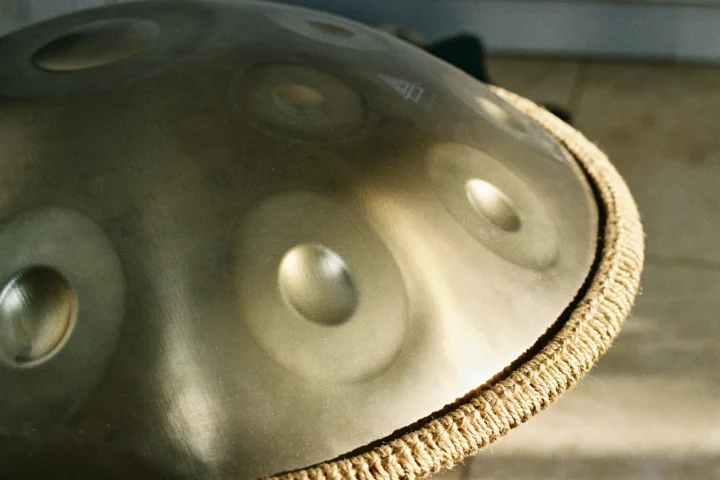
Steelpan vs steel tongue drum vs handpan
| Feature | Steelpan (steel drum) | Steel tongue drum | Handpan |
|---|---|---|---|
| Where it comes from | Trinidad and Tobago, 1930s and 1940s | United States, 2007 | Switzerland, 2000 |
| How the notes are made | Areas hammered into a sunken steel bowl | Tongues cut into the top of a steel shell | Dents hammered into a domed steel shell |
| Played with | Sticks with rubber tips | Soft mallets or fingers | Hands |
| Sound | Bright, ringing and loud | Soft and bell-like | Warm and resonant |
| Notes | Full pans have every note. Starter pans have one scale | One scale, often 8 to 15 notes | One scale, often 9 or 10 notes |
| Typical use | Steel bands, school music, Caribbean styles | Relaxation, classrooms, casual play | Solo playing |
| Price band on 9 October 2026 | Starter pans about two hundred to three hundred and fifty dollars. Full pans cost far more | About twenty dollars to under four hundred | About one hundred and sixty to four hundred and thirty dollars for budget models |
Price bands are rounded from Amazon.com listings on the date shown. They change, so check the live listing.
Steel pan or steel drum: which name is right?
They are the same instrument. “Steel drum” is the everyday name, and “steelpan” or just “pan” is the name players prefer. Strictly speaking it is not a drum at all, because it has no skin. The steel itself rings.
The steelpan was developed in Trinidad and Tobago during the 1930s and 1940s, growing out of the percussion bands that played at Carnival. Makers found that dents hammered into metal containers gave different notes, and oil drums became the standard starting material. It is the national instrument of Trinidad and Tobago, and a person who plays it is called a pannist.
Types of steelpan
A steel band is a full orchestra made of pans, from high melody instruments down to deep bass. The higher the pan, the more notes fit on a single drum. The lowest pans have only a few notes each, so one player stands among several of them.
| Pan | Voice | Job in the band | Drums per player |
|---|---|---|---|
| Tenor, also called lead | Highest | Plays the melody | One |
| Double tenor | High | Melody and harmony | Two |
| Double seconds | Middle | Harmony and counter-melody | Two |
| Guitar and cello pans | Lower middle | Chords and rhythm | Two to four |
| Bass | Lowest | The bass line | Usually six or more |
If you are buying a first steelpan, you want a tenor pan, or a small starter pan modelled on one. It carries the tune, it is a single drum, and it is the instrument most lessons begin on.
Starter pans and full pans
There are two very different kinds of tenor pan on sale.
- Starter pans are small, light and tuned to one scale. One popular starter pan we checked is a 16-inch, one-octave instrument with the note names marked on the steel, sold with mallets and a stand. They are made for children, classrooms and adults who want to play simple tunes.
- Full tenor pans have every note, like the black and white keys of a piano, across more than two octaves. They are hand-tuned by specialist builders, they are large, and they cost many times more. This is what steel bands use.
A starter pan is the right first purchase for almost everyone. If you join a school or community band, the band usually owns the full-size pans.
Steel tongue drums explained
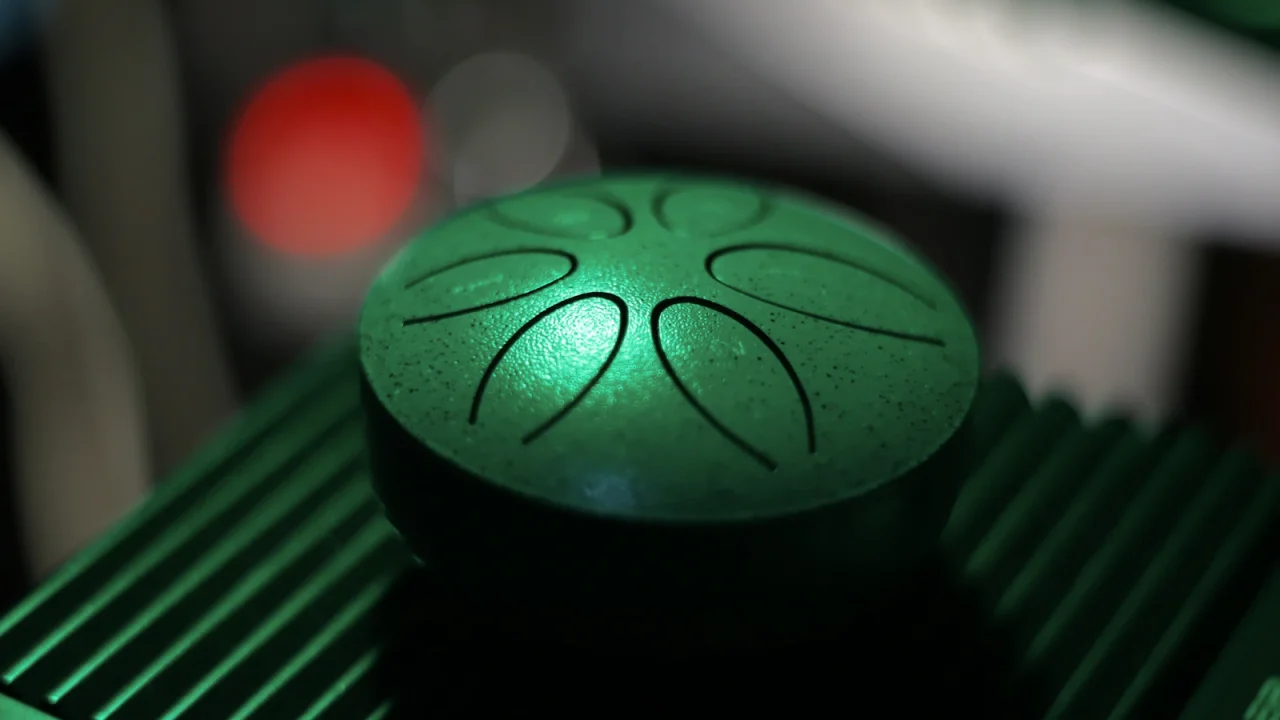
The steel tongue drum is a much newer instrument. The first one was made in 2007 from an empty propane tank, which is why you will also see it called a tank drum. Tongue-shaped slots are cut into the top of a steel shell. Each tongue is a note. A longer tongue gives a lower note.
You play it by tapping the tongues with soft rubber mallets or with your fingers. The notes are tuned to a single scale, often a five-note scale where every note sounds good with every other. That is why sellers say there are no wrong notes. A small child can pick up the mallets and make something that sounds like music.
What to look for in a tongue drum
- Size. Tongue drums run from about 6 inches across to 14 inches and more. Larger drums sound deeper and fuller. Small ones are easier for children to hold and carry.
- Number of notes. Eight notes is plenty for free play. More notes, up to fifteen or so, let you pick out more well-known tunes.
- Scale and key. A five-note scale is the most forgiving. A full major scale lets you play familiar songs. The key only matters if you plan to play with other instruments.
- Tuning. This is where cheap and dear drums differ most. Listen to a recording. Each note should be clear, and the notes should sound in tune with each other.
- What is included. Most come with mallets and a bag. Some add a songbook or note stickers, which help beginners.
Are steel drums hard to play?
It depends on which one you mean.
A steel tongue drum is one of the easiest instruments there is. There is no technique to learn before you can make a pleasant sound, and the notes cannot clash.
A starter steelpan is easy too. The notes are labelled, so you can follow a songbook by letter and play a recognisable tune on the first day.
A full steelpan takes real study. The notes are not laid out in a row from low to high as they are on a piano. On a tenor pan they are arranged in a circle, so neighbouring notes in a tune can be on opposite sides of the bowl. Learning where everything is takes time, and so does a smooth roll, the rapid repeated stroke that makes long notes sing. It is very learnable, especially in a band, but it is a proper instrument with a proper learning curve.
Volume, space and care
- Volume. A tongue drum is quiet enough for a flat. A steelpan is loud and carries a long way. Think about your neighbours before buying one for home practice, and protect your hearing in a band. Our guide to earplugs for musicians explains the options.
- Space. A tongue drum sits on your lap or a table. A starter pan needs a stand and a little floor. Full pans are large and awkward to move.
- Rust. Both are steel. Keep them dry, wipe them after playing, and do not store them damp.
- Heat. Do not leave either in a hot car or in direct sun for long.
- Sticks and mallets. Use the type supplied. Hard sticks can dent the notes. Our mallet guide explains the different kinds.
- Tuning. A steelpan that has gone out of tune needs a specialist tuner. This is one more reason to treat it gently.
Which should you buy?
Choose a steel tongue drum if:
- You want something calm and easy that anyone can play at once.
- You are buying for a young child or a classroom.
- Noise is a concern.
- Your budget is small.
Choose a steelpan if:
- You love the sound of Caribbean music.
- You want to play real melodies and follow songbooks.
- You or your child may join a steel band.
- You have somewhere to play where volume is not a problem.
If you are still deciding between these and other first instruments, our guide to the best percussion instruments for beginners compares the main options, and the Instrument Match Quiz suggests one based on your space and noise limits.
Common mistakes to avoid
- Buying a tongue drum when you wanted a steelpan. Listings use “steel drum” for both. Look at the photos and the description.
- Judging by the number of notes alone. A well-tuned eight-note drum is more enjoyable than a poorly tuned fifteen-note one.
- Not listening first. Find a recording of the model before you order.
- Expecting a starter pan to play every song. It has one scale. Songs in other keys will not fit.
- Forgetting the stand. A steelpan has to hang freely to ring. Check that a stand is included.
- Using hard sticks. They can damage the tuning.
- Leaving it in the sun or the damp. Heat and rust are the main enemies of both instruments.
Instruments to look at
Disclosure: the buttons below are affiliate links. If you buy through one of them, we may earn a commission at no extra cost to you.
These are two steel tongue drums and one starter steelpan. We chose them from their published specifications. We have not played or tested them, and we cannot vouch for the tuning of any single instrument. We checked each listing on 9 October 2026. Check stock and price on the listing before you decide.
HOPWELL Steel Tongue Drum, 13 in, 15 Notes, D Major
Best for: Beginners and families who want to try a tongue drum for little money.
Fifteen notes in a major key give enough range to pick out familiar songs, and a songbook, mallets and bag are in the box.
- 13 in drum with 15 notes in D major
- Music book, mallets and carry bag included
- Several colours and sizes on the same listing
Keep in mind: Tuning on low-cost tongue drums can vary from one to the next. Listen as soon as it arrives, and return it if any note sounds off.
Affiliate link — we may earn a commission.
Meinl Sonic Energy Octave Steel Tongue Drum, 8 Notes, 10 in
Best for: Players who want a tongue drum from a long-established percussion company.
The maker says each note is built from a high and a low octave, which gives a fuller sound that it compares to a handpan.
- 10 in drum with 8 notes
- Coated stainless steel
- Mallets and bag included
Keep in mind: Eight notes are ideal for free play but limit which tunes you can pick out. It costs several times as much as the low-cost option above.
Affiliate link — we may earn a commission.
Panyard Jumbie Jam Steel Drum with Tube Floor Stand
Best for: Children, classrooms and adults who want to play simple tunes on a real pan.
The listing says the notes are marked with letters that match the songbooks, so you can play by following the letters. A height-adjustable floor stand is included.
- Starter steelpan, listed for ages 3 and up, adults and classrooms
- Note names marked on the pan
- Height-adjustable metal floor stand
- Listed as made in the USA by Panyard
Keep in mind: It is tuned to one scale, so it cannot play in every key. It is loud, like any steelpan. Other colours and a table-top version are sold as separate options.
Affiliate link — we may earn a commission.
Related reading: our guides to handpans and hang drums, drums vs percussion and how they differ and bongo vs conga drums.
Frequently asked questions
What is the difference between a steel pan and a steel drum?
There is none. They are two names for the same instrument from Trinidad and Tobago. Players tend to say steelpan or pan, because the instrument has no skin and is not a drum in the strict sense.
Is a steel tongue drum the same as a steel drum?
No. A steel tongue drum is a small instrument with tongues cut into its top, played with soft mallets. A steel drum, or steelpan, is a larger tuned pan played with rubber-tipped sticks. Online listings often mix the two names up.
What is the best steel drum for a beginner?
For a calm, easy instrument, a steel tongue drum with 8 to 15 notes. For playing real tunes, a small starter steelpan with labelled notes and a stand. Full-size tenor pans are best left until you are playing in a band.
Are steel drums hard to play?
Tongue drums and starter pans are easy. Most people play something pleasing on the first day. A full steelpan is harder, because the notes are arranged in a circle and take time to memorise.
What are the types of steel drums?
In a steel band, the main types are the tenor or lead pan, double tenor, double seconds, guitar and cello pans, and bass pans. High pans are a single drum. Low pans are played in sets of several drums.
How many notes should a steel tongue drum have?
Eight notes are enough for relaxed, free playing. Eleven to fifteen notes make it easier to play well-known songs. More notes do not make a drum better if the tuning is poor.
Checklist before you buy
- Do I want a steelpan or a steel tongue drum?
- Who will play it, and how much noise is acceptable?
- How many notes does it have, and in which scale?
- Have I listened to a recording of this model?
- Are mallets or sticks included?
- For a steelpan: is a stand included?
- Is there a bag for carrying and storage?
- What is the return policy if a note is out of tune?
- Have I checked today’s price on the live listing?
The bottom line
“Steel drum” covers two very different purchases. A steel tongue drum is small, quiet, cheap and instantly playable, which makes it a lovely first instrument for a child or a way to unwind for an adult. A steelpan is louder, brighter and more demanding, and it opens the door to playing real music with other people.
Decide which of those you want first. Then listen before you buy, check what is in the box, and keep the instrument dry and out of the sun. Whichever you choose, a few minutes of regular playing does more than an occasional long session, and our Practice Time Calculator can help you plan it.