Best Percussion Instruments
Where to start: the easiest percussion instruments to learn, matched to your space, noise limits and goals.
PercussionDream is reader-supported. When you buy through links on this page we may earn an affiliate commission, at no extra cost to you. How this works
Percussion covers anything you strike, shake or scrape, which is exactly why choosing a first instrument feels confusing. The good news is that a handful of instruments are friendly from the first session, and the right one mostly depends on three things: how much noise you can make, how much space you have, and the music you want to play.
This guide walks through the most beginner-friendly options, what each is good at, and where each one falls short.
Start with your situation, not the instrument
Shared walls or an apartment? Look at a practice pad, bongos, a cajon on a rug, or an electronic drum kit with headphones. An acoustic drum kit is rarely realistic.
A garage, basement or detached house? An acoustic kit becomes an option, along with congas and djembe, which all project strongly.
Starting school band? Check the supply list from the band director before buying anything. Most programmes ask for a bell kit, a snare kit or a combination of the two.
Buying for a young child? Small hand percussion, junior bongos or a junior drum kit sized for their reach will be more rewarding than adult-sized gear.
What makes an instrument easy to begin on
Three things help beginners most: an instrument that makes a satisfying sound straight away, one that needs little setup or tuning, and one that is forgiving of imperfect technique. Hand drums score well on all three. The drum kit is harder at first because four limbs have to cooperate, but it has the widest range of music to play along with.
What about tambourines and shakers?
Tambourines, egg shakers and other small hand percussion are the cheapest way to start playing with other people. They teach steady time, they fit in a bag, and they are useful forever. They are a great first purchase for a child, or a second purchase for anyone learning a drum.
Quick comparison
| Instrument | Best for | Volume | Portable | Learning curve |
|---|---|---|---|---|
| Cajon | Playing along with songs | Moderate | Yes | Gentle |
| Bongos | Latin rhythms, small spaces | Moderate | Very | Gentle |
| Practice pad and sticks | Drum kit and band technique | Very quiet | Very | Gentle, but needs patience |
| Djembe | Drum circles and groups | Loud | Yes | Moderate |
| Congas | Latin and Afro-Cuban music | Loud | Not really | Moderate |
| Acoustic drum kit | Rock, pop, funk | Very loud | No | Steeper |
| Electronic drum kit | Quiet kit practice | Quiet with headphones | No | Steeper |
Beginner-friendly percussion instruments
These boxes describe types of gear rather than single models. Each button opens live Amazon results, so you see current options, prices and buyer reviews for yourself. We have not bench-tested individual products for this guide. How we choose gear.
Cajon
Best for: Acoustic covers, worship bands and home practice
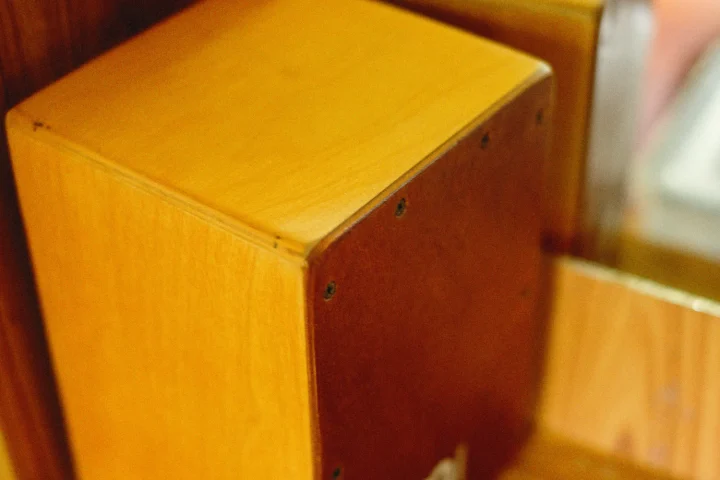
A wooden box you sit on. The centre of the front plate gives a bass note and the top edge a snare-like crack, so one instrument can outline a whole drum groove.
- Two clear sounds from day one
- No stands or tuning to worry about
- Doubles as a seat
Keep in mind: Bass notes can travel through floors
Affiliate link — we may earn a commission.
Want the detail? Read our full guide to cajons.
Bongos
Best for: Latin rhythms, casual jams and small spaces
A pair of small drums held between the knees and played with the fingers. Compact, affordable and easy to keep within reach.
- Small and light
- Low cost of entry
- Skills transfer to congas
Keep in mind: High pitch cuts through, so volume can surprise you
Affiliate link — we may earn a commission.
Want the detail? Read our full guide to bongos.
Practice pad and sticks
Best for: Future drummers, school band students and night-time practice
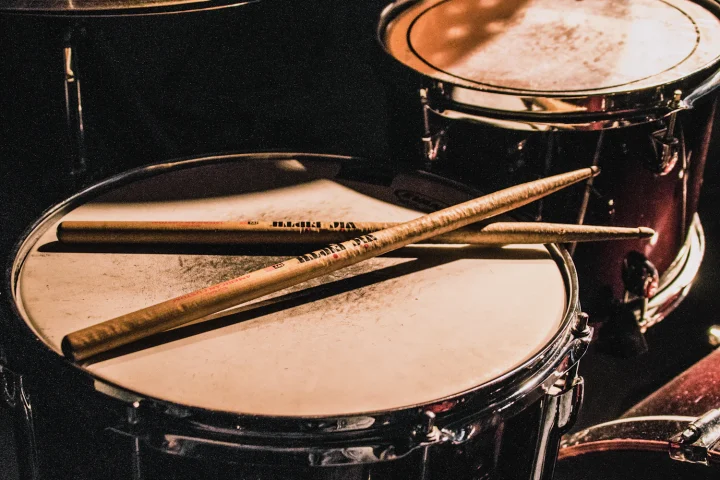
A rubber pad and a pair of 5A sticks teach the grip, strokes and rudiments every drummer needs, at a volume the neighbours will tolerate.
- Very quiet
- Inexpensive
- Everything you learn transfers to a kit
Keep in mind: Less exciting than a full instrument on its own
Affiliate link — we may earn a commission.
Want the detail? Read our full guide to practice pads.
Djembe
Best for: Drum circles, world music and group classes
A goblet-shaped drum with a deep bass in the centre and bright tones at the edge. Key-tuned models with synthetic heads need very little care.
- Three distinct sounds
- Works seated or standing with a strap
- Great in groups
Keep in mind: Slaps are loud and take time to learn
Affiliate link — we may earn a commission.
Want the detail? Read our full guide to djembes.
Beginner drum kit
Best for: Rock, pop, funk and anyone set on becoming a drummer
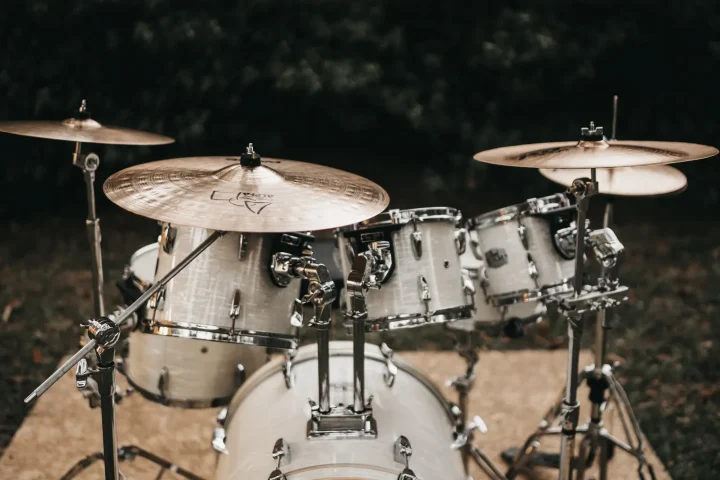
Acoustic kits are the most rewarding to play but need space and tolerant neighbours. Electronic kits with mesh pads and headphones solve the noise problem.
- Plays along with almost any music
- Electronic kits can be nearly silent to others
- Huge choice of lessons
Keep in mind: Needs the most space and budget
Affiliate link — we may earn a commission.
Want the detail? Read our full guide to beginner drum kits.
Tambourine and shaker set
Best for: Children, singers and anyone playing with friends
Small hand percussion teaches steady time and lets you contribute to music immediately.
- Costs very little
- Fits in a bag
- Useful at every level
Keep in mind: Limited on its own
Affiliate link — we may earn a commission.
Before you buy: a short checklist
- Be honest about noise: who else can hear you, and when?
- Measure the space you can leave the instrument set up in
- Pick the music you want to play first, then the instrument
- Budget for the essentials around it: a seat, a bag, hearing protection
- If a teacher or band director is involved, ask what they prefer
Frequently asked questions
What percussion instrument is easiest for beginners?
The cajon and bongos are the easiest to get a pleasing sound from quickly, because they are played with the hands and need almost no setup. A practice pad and sticks is the easiest way to begin if the drum kit is your goal.
Is a cajon good for beginners?
Yes. A basic groove needs only two sounds, bass and snare, and most people can play one in their first session. It is also a comfortable seat, which makes long practice easier.
Are bongos easier than congas?
Usually, yes. Bongos are smaller, cheaper and can be played seated anywhere. Congas need more space and more developed hand technique, but the basic strokes you learn on bongos carry over.
What percussion instruments are good for home practice?
A practice pad, bongos, a cajon on a rug and an electronic drum kit with headphones are the most home-friendly choices. Acoustic drum kits, congas and djembes project strongly and are harder to keep from the neighbours.
How long does it take to learn percussion?
Most people can play simple grooves within a few weeks of regular practice. Solid, relaxed technique takes months to years. Short daily sessions build skill faster than one long session a week.
The bottom line
If you want the shortest path to making music, start with a cajon or bongos. If the drum kit is the dream, start on a pad and sticks today and add the kit when space and budget allow. Not sure which fits you? The Instrument Match Quiz narrows it down in a couple of minutes.