Handpans and Hang Drums for Sale: Prices, Types and What to Check
The original Hang is no longer made, so a new hang drum is really a handpan: here is what they cost, how to judge one and what to check before you buy.
PercussionDream is reader-supported. When you buy through links on this page we may earn an affiliate commission, at no extra cost to you. How this works
Few instruments get people asking “what is that?” as quickly as a handpan. It looks like a small steel flying saucer, it is played with bare hands, and it makes a soft, ringing sound that seems to hang in the air. The trouble starts when you try to buy one. Prices range from the cost of a cheap guitar to the cost of a used car, and the names are confusing.
This guide explains what is really for sale, what a handpan costs, how to tell a good one from a poor one, and what to check before you pay. It is written for first-time buyers, so you do not need any musical background to follow along.
Hang, hang drum or handpan: what the names mean
Most of the confusion around buying one of these comes from the names. Here is what each one means.
| Name | What it means | Can you buy one new? |
|---|---|---|
| Hang | The original instrument, made by one company, PANArt, in Bern, Switzerland. It was developed in 2000 and first shown in 2001 | No. PANArt announced in December 2013 that it would no longer be made |
| Hang drum | A popular nickname for the Hang and for handpans in general. Its makers have called the name a misnomer, because it is not a drum | The name is used loosely for handpans |
| Handpan | The general word for instruments of this type from any maker. The term first appeared in 2007 | Yes, from many makers |
| Steel tongue drum | A different, smaller instrument with tongues cut into the steel. It is often sold alongside handpans | Yes, and for much less |
So if you see a new “hang drum for sale”, it is almost certainly a handpan, or sometimes a steel tongue drum. That is not a problem. It simply helps to know what you are looking at.
How a handpan works
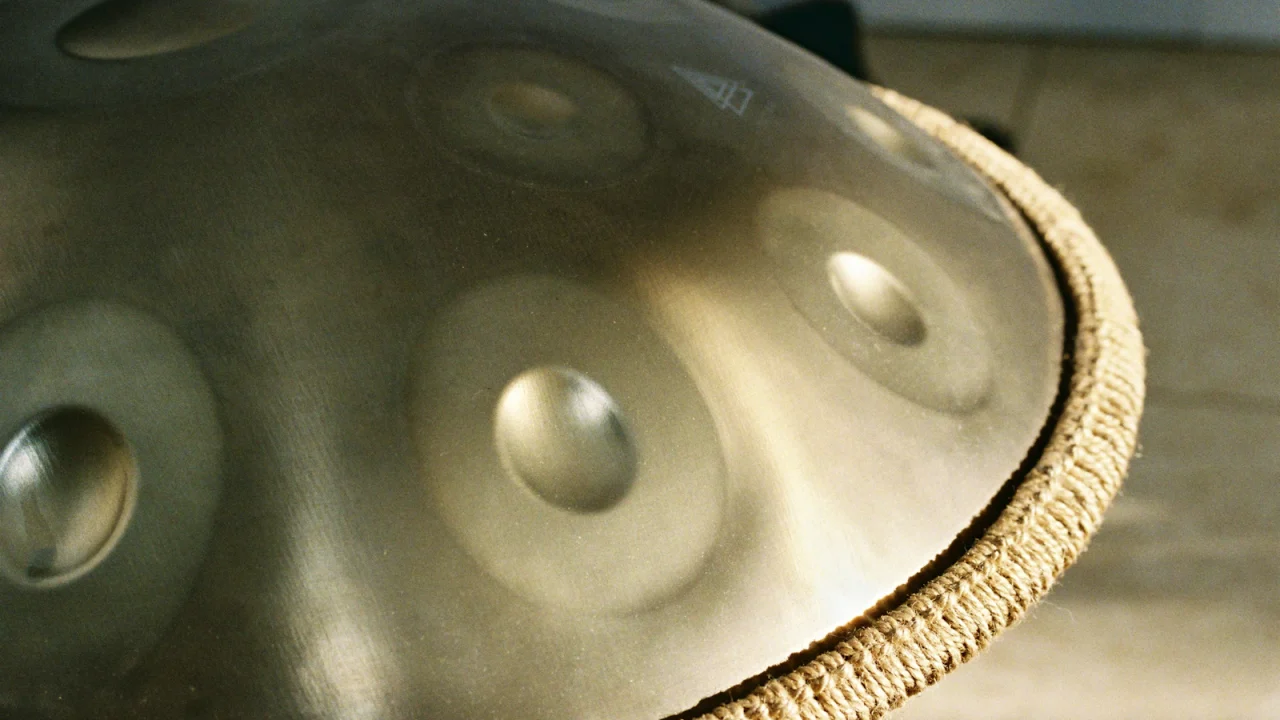
A handpan is made from two shallow steel bowls joined at the rim. The top bowl has a central note, often called the ding, with a ring of oval dents around it. Each dent is a note, hammered and tuned by the maker. The bottom bowl has a round opening.
You rest the instrument on your lap, or on a stand, and tap the notes with your fingers and thumbs. It is played with the hands, not with sticks. Every handpan is tuned to one scale, which means all its notes sound good together. You cannot play a wrong note in the usual sense, which is a big part of the appeal for beginners.
How much does a handpan cost?
The bands below are a snapshot from 9 October 2026. Prices change, so check current listings.
| Type | What it is | Price band on 9 October 2026 |
|---|---|---|
| Budget handpan from a general marketplace | A 22-inch, 9 or 10 note instrument, usually in D minor | About one hundred and sixty to about four hundred and thirty dollars on Amazon.com |
| Handcrafted handpan from a specialist maker | Hand-hammered and hand-tuned, often made to order | Seller guides we read that day put these at around a thousand dollars and upward. We did not check makers’ own price lists, so ask for a current quote |
| Original PANArt Hang | No longer made. Sold second-hand only | Set by collectors. We did not find a reliable current figure |
| Steel tongue drum | A smaller, simpler instrument with a related sound | From well under fifty dollars to a few hundred |
Why is the gap so wide?
Tuning a handpan is slow, skilled work. Each note has to be hammered into shape and adjusted until it rings true, and each note affects its neighbours. A specialist maker spends many hours on a single instrument. A budget instrument is made faster, with less time spent on each note.
That does not make every budget handpan bad or every costly one good. It does mean that the cheaper the instrument, the more it matters to hear it before you commit, and to buy from a seller who accepts returns.
What to check before you buy
The scale
The scale decides the mood of the instrument, and it cannot be changed later. The most common choice for a first handpan is D minor, often labelled “D Kurd”. It sounds gentle and slightly sad, and a great deal of handpan teaching material is written for it. If you are unsure, it is a safe place to start.
The number of notes
Most beginner handpans have nine or ten notes: one in the centre and the rest in a ring. More notes give you more tunes, but they also crowd the surface. Nine is plenty to learn on.
The tuning pitch: 440 or 432
This is easy to miss, and it matters. Most instruments and nearly all recorded music are tuned to a standard where the note A is 440 Hz. Some handpans are tuned slightly lower, to 432 Hz.
A 432 Hz handpan sounds fine on its own. But it will sound out of tune if you play it with a guitar, a piano or a backing track tuned to 440. If you ever plan to play with other people or along with recordings, choose 440 Hz. If you only want to play alone, either will do.
The steel
Handpans are usually made from nitrided steel or stainless steel. Nitriding is a heat treatment that hardens the surface and helps it resist rust. Sellers commonly describe nitrided steel as giving a shorter, drier note, and stainless steel as ringing for longer. Both still need care to prevent rust.
What comes with it
A padded bag is close to essential, because a dent can ruin a note. Some listings also include a stand and a cleaning cloth. Check before you compare prices.
A recording of the real instrument
Ask for, or look for, a video of the exact instrument or model with every note played slowly. Each note should ring clearly with no buzz or rattle, and notes an octave apart should sound in tune with each other.
Returns and support
A handpan can arrive out of tune after rough shipping. Buy from a seller with a clear return policy. With a specialist maker, ask whether they retune their instruments and what that costs.
Buying a used handpan or Hang
The second-hand market is the only place to find an original Hang, and it is a good place to find a quality handpan for less. It also carries the most risk.
- Ask for a video of every note. Listen for dead, buzzing or out-of-tune notes.
- Look for dents. A dent on or near a note usually means the tuning has been damaged.
- Check for rust, especially around the rim and inside the bottom opening.
- Ask who made it. A known maker can often retune an instrument. An unnamed one may not be worth retuning.
- Be careful with anything described as an original Hang. The word is used loosely. Ask for proof of where it came from, and do not pay a collector’s price for an ordinary handpan.
- Use a payment method that protects you. Meet in person and play it if you possibly can.
Where to buy
- Specialist makers and handpan shops. The best quality and the best advice, and often the chance to try before you buy. Expect higher prices and sometimes a waiting list.
- General online marketplaces. The lowest prices and fast delivery. Quality varies from one instrument to the next, so the return policy is your safety net.
- Second-hand listings and player groups. Good value if you know what to check, or can bring someone who does.
Looking after a handpan
- Wipe it with a soft cloth after playing. Sweat causes rust.
- Oil it lightly from time to time, as the maker advises.
- Keep it out of direct sun and hot cars. Heat can pull it out of tune.
- Do not store it damp in its bag for long periods.
- Play it with your hands only. Sticks and hard mallets can dent the notes.
- Carry it in a padded bag, and never put anything on top of it.
Is a handpan hard to learn?
It is one of the friendlier instruments to begin on. Because every note belongs to the same scale, even random tapping sounds pleasant, and most people can play a simple pattern in their first session. Getting a clear, ringing tone takes longer. The touch is light and quick, more like tapping a hot surface than hitting a drum.
Rhythm skills carry over from other hand percussion. If you already play a cajon or a djembe, you have a head start. A few minutes a day is enough, and our Practice Time Calculator can turn that into a plan.
A cheaper way in: the steel tongue drum
If a handpan is out of reach, look at a steel tongue drum. It is smaller, tougher and much cheaper, and it shares the same idea: a set of notes in one scale, with no wrong notes. The sound is softer and more bell-like. It is usually played with small mallets, though fingers work too.
It is not a small handpan, and it will not sound like one. But it is a real instrument in its own right, and a sensible way to find out whether this kind of music is for you.
Common mistakes to avoid
- Buying on looks. Colour and finish tell you nothing about the tuning.
- Ignoring 432 Hz in the listing. It matters if you will ever play with others.
- Paying a collector’s price for a “Hang” without proof.
- Skipping the bag. One knock can spoil a note.
- Buying with no return policy. Shipping can detune an instrument.
- Expecting a budget handpan to match a handcrafted one. It may be enjoyable, but it is a different class of instrument.
- Playing it with sticks. Use your hands.
Instruments to look at
Disclosure: the buttons below are affiliate links. If you buy through one of them, we may earn a commission at no extra cost to you.
These are two budget handpans and one steel tongue drum. We chose them from their published specifications. We have not played or tested them, and we cannot vouch for the tuning of any single instrument. We checked each listing on 9 October 2026. Read the return policy, and check stock and price on the listing before you decide.
AS TEMAN Handpan, D Minor, 22 in
Best for: Solo players who want a complete package.
The listing includes a carrying bag, a stand and a cleaning cloth, so there is nothing else to buy on day one.
- 22 in handpan in D minor
- Stainless steel, with heat treatment and nitriding according to the listing
- Carrying bag, stand and cleaning cloth included
- Tuned to 432 Hz in the version we checked
Keep in mind: At 432 Hz it will not be in tune with instruments at the usual 440 Hz. The title says 9 notes and one bullet point says 10, so confirm the note count for the option you choose.
Affiliate link — we may earn a commission.
LOMUTY Handpan, 22 in, 9 Notes
Best for: Finding out whether the handpan is for you at a lower price.
It is a full-size, nine-note instrument in D Kurd, the scale most beginner material is written for.
- 22 in, 9 notes, D Kurd tuning
- 1.2 mm nitrided stainless steel according to the listing
- Notes laid out in a zigzag from low to high
- Care advice in the listing: oil regularly, avoid knocks, sun and extreme temperatures
Keep in mind: Only a couple were in stock when we checked. The part of the listing we read does not state the tuning pitch or list a bag, so confirm both before you order.
Affiliate link — we may earn a commission.
Meinl Sonic Energy Octave Steel Tongue Drum, 8 Notes, 10 in
Best for: Anyone who likes the handpan sound but not the price or the size.
The maker describes its sound as similar to a handpan, because each note is built from a high and a low octave. It comes from a long-established percussion company.
- 10 in steel tongue drum with 8 notes
- Coated stainless steel
- Mallets and bag included
- Played by tapping the tongues in any order
Keep in mind: It is a tongue drum, not a handpan. It is smaller and quieter, and it is mainly played with mallets.
Affiliate link — we may earn a commission.
Still weighing up which instrument to start on? Our guide to the best percussion instruments for beginners compares the main options, and the Instrument Match Quiz suggests one based on your space and noise limits.
Related reading: our guides to the cajon, the wooden box drum you sit on, drums vs percussion and how they differ and bongo vs conga drums.
Frequently asked questions
Can you still buy a real Hang?
Not new. PANArt, the Swiss company that created the Hang, announced in December 2013 that it would no longer be made. Original Hangs change hands second-hand, and the word is often used loosely for other handpans, so ask for proof.
What is the difference between a hang drum and a handpan?
The Hang is the original instrument from one maker. Handpan is the general word for instruments of the same type from any maker. “Hang drum” is a nickname that people use for both.
How much does a hang drum cost?
On 9 October 2026, 22-inch handpans on Amazon.com were listed from about one hundred and sixty to about four hundred and thirty dollars. Handcrafted instruments from specialist makers cost much more. Check current listings, because prices change.
Why are handpans so expensive?
Each note is hammered and tuned by hand, and each note affects the others. A skilled maker spends many hours on one instrument. Lower-cost handpans are made more quickly, which is why it matters to hear one before buying.
What is the best handpan scale for a beginner?
D minor, often labelled D Kurd, is the most common first choice. It is easy on the ear, and a lot of teaching material is written for it.
Should I choose 432 Hz or 440 Hz?
Choose 440 Hz if you will ever play with other instruments or along with recordings, because that is the standard they use. A 432 Hz handpan is fine for playing alone, but it will sound out of tune next to a 440 Hz instrument.
Checklist before you buy
- Is it a handpan, a steel tongue drum or a claimed original Hang?
- Which scale is it tuned to?
- How many notes does it have?
- Is it tuned to 440 Hz or 432 Hz?
- Have I heard every note of this instrument or model?
- Is a padded bag included?
- What is the return policy?
- For used instruments: any dents, rust or dead notes?
- Have I checked today’s price on the live listing?
The bottom line
You cannot buy a new Hang, but you can buy a handpan, and there has never been more choice. Budget instruments make it possible to start for a few hundred dollars. Handcrafted ones cost far more and reward you with finer tuning and tone.
Whichever you choose, the same checks apply. Know the scale, know the pitch, hear the instrument, and buy from a seller who will take it back. If you simply want to try this kind of music, a steel tongue drum is a low-risk place to begin, and you can move on to a handpan once you know it is for you.
You may also like
Buying Steel Tongue Drums and Steelpans: A Full Guide
Best Electronic Drum Sets for Churches: What to Look For